




Scale buildup in pipes, tanks and heat exchangers costs businesses millions in lost energy and repairs. Minerals like calcium and magnesium settle on metal surfaces acting as insulators and starting points for corrosion. HEDP 60 or hydroxyethylidene diphosphonic acid in its common 60% concentration stops this process. It acts as a shield against deposits helping machines run longer and more efficiently. From massive cooling towers to simple textile dye baths this chemical provides a way to protect expensive equipment and maintain product quality.
What is HEDP Chemical
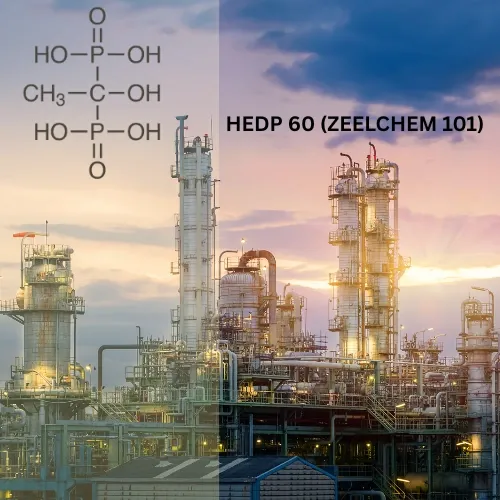
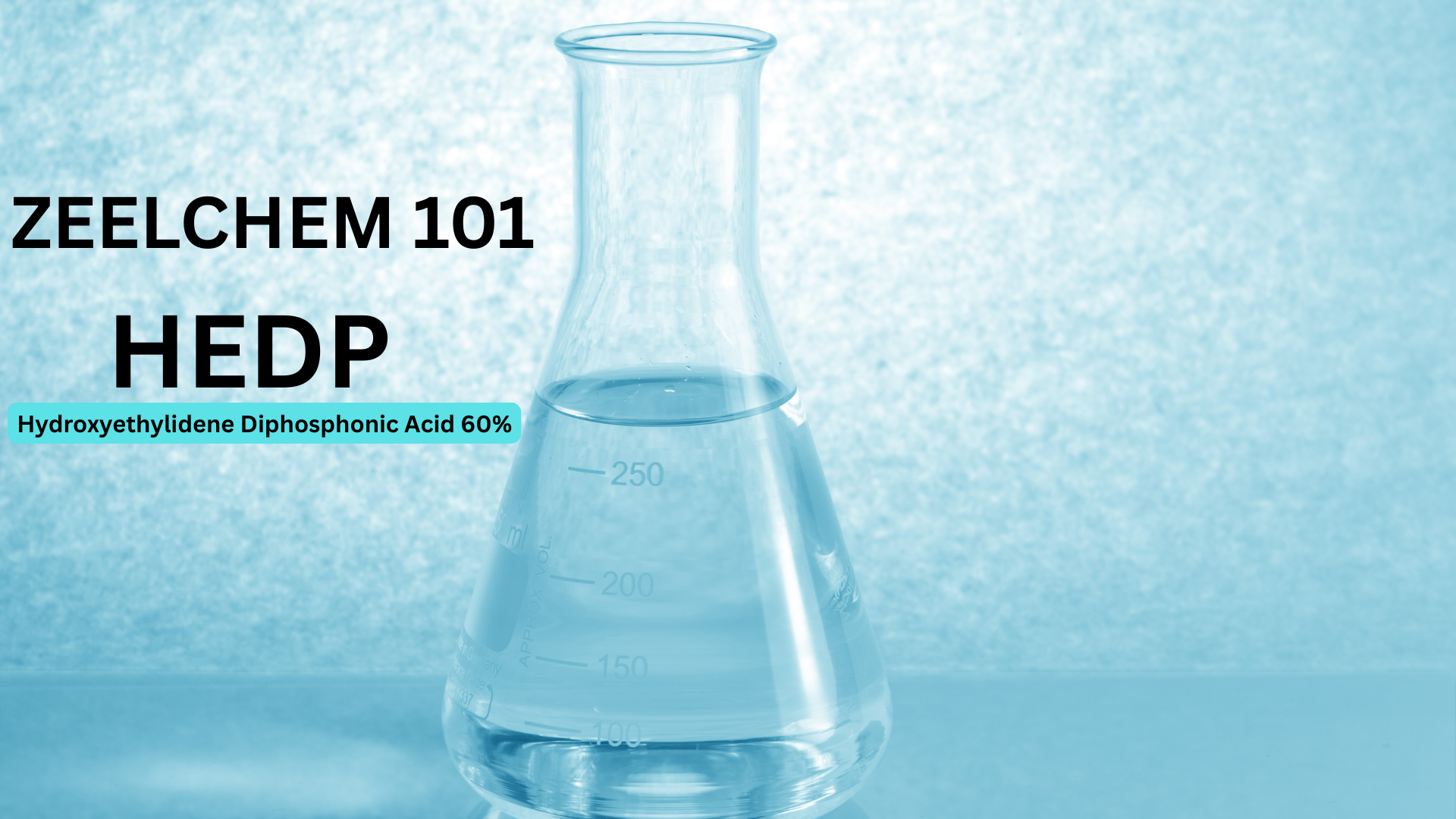
HEDP 60 is a phosphonate compound known for its ability to stop scale and keep metal ions in check. Its chemical formula is C2H8O7P2. The "60" in its name refers to its commercial form. which is a 60% active solution in water. It is clear slightly yellow, and mixes easily with water. It stays stable even when heated or when pH levels change which makes it a top choice for harsh industrial environments.
HEDP Full Form
HEDP stands for 1-Hydroxyethylidene-1 1-Diphosphonic Acid.
HEDP Other Name
- Etidronic Acid
- 1-Hydroxyethane-1 1-diphosphonic acid
- Hydroxyethylidene diphosphonic acid
- HEDP Acid
- HEDP 50%
- HEDP 60%
- HEDP Powder
HEDP Chemical Identification
|
Parameter |
Details |
|
Product Name |
HEDP |
|
Full Name |
1-Hydroxyethylidene-1,1-Diphosphonic Acid |
|
CAS Number |
2809-21-4 |
|
Molecular Formula |
C₂H₈O₇P₂ |
|
Molecular Weight |
206.03 g/mol |
|
Chemical Category |
Organophosphonate |
|
Common Form |
Liquid or powder |
|
Main Function |
Scale inhibition, corrosion inhibition, chelation |

Mechanism of Action: Scale and Corrosion Inhibitor
HEDP 60 stops scale through two main methods Threshold Inhibition: It interferes with the way mineral crystals grow. Even at low doses it binds to crystal seeds like calcium carbonate or calcium sulfate stopping them from sticking to surfaces. Crystal Distortion: Instead of forming hard tight layers the mineral crystals become misshapen. These loose particles remain suspended in the water and are easily flushed out through blowdown or filtration.
For corrosion HEDP 60 works by building a thin, protective film on metal surfaces like steel and copper. This film acts as a barrier, preventing oxygen and water from attacking the metal. While it provides some protection on its own, operators often pair it with other inhibitors to boost performance against aggressive water.
Advantages of Using hedp 60 solution
Using HEDP 60 provides several operational benefits:
- High Stability: It does not break down easily at high temperatures or varying pH levels.
- Broad Compatibility: You can blend it with polymers, biocides, and other corrosion inhibitors.
- Cost Savings: By preventing scale, it keeps heat transfer rates high, which lowers energy bills.
- Easy Application: As a liquid, it is simple to store and inject into water systems.
Key Benefits of HEDP
Scale Inhibition
ZEELCHEM 101 helps prevent scale formation caused by calcium, magnesium, and other hardness salts in water systems.
Corrosion Control
ZEELCHEM 101 supports corrosion inhibition in cooling water systems, boilers, and industrial water loops.
Metal Ion Chelation
ZEELCHEM 101 binds with metal ions and helps reduce unwanted precipitation, staining, and deposition.
High Stability
ZEELCHEM 101 has good resistance to hydrolysis, heat, pH variation, and chlorine oxidation compared with many other phosphonates.
Multi-Industry Use
It is used across water treatment, oilfield, textile, detergent, electroplating, and industrial cleaning applications.
Key Features
HEDP 60 is a great choice for Calcium carbonate scaling inhibitor as well as solid metal Ion Sequestration and efficient protection against corrosion for industrial systems of water. It is effective under extreme temperatures and conditions of alkaline and is suitable for harsh industrial applications.
HEDP Chemical Treatment for Corrosion and Scale Inhibition
HEDP phosphonate chemical is an valuable phosphonate-based chemical used in water treatment for scaling and corrosion management. It is useful in systems where calcium carbonate, calcium sulphate, and other mineral deposits may develop due to hard water conditions. It helps stabilize metal ions and prevents them from forming hard deposits on equipment surfaces. In cooling circuits, boiler systems, desalination plants, and industrial circulation systems, HEDP provides dependable performance even under demanding operating conditions. It also helps protect metal surfaces from corrosion, which is necessary for improving equipment life. By reducing scaling and corrosion together, this chemical contributes to smoother operations, reduced maintenance requirements, and improved RO Antiscalant system reliability.
HEDP 60 in Water Treatment Applications
Cooling Water Systems
Cooling towers are prone to mineral buildup because water constantly evaporates leaving behind concentrated salts. HEDP 60 keeps these salts from settling on heat exchanger surfaces. When surfaces stay clean heat moves from the process water to the cooling air without resistance. This means your chiller or tower uses less electricity to do the same amount of cooling. For best results, maintain a consistent residual level of HEDP 60 in the system based on water analysis.
Boiler Water Treatment
Boilers face extreme heat which speeds up scale formation. If scale coats the boiler tubes the metal can overheat and eventually crack. HEDP 60 acts as a safety net in these high-pressure settings. By keeping the tubes free of mineral deposits it ensures consistent heat transfer. This reduces the risk of tube failure and keeps the boiler running for years.
Desalination Plants
In desalination clean water is the goal but salt concentration is high. Reverse osmosis (RO) membranes are sensitive to scale which blocks water flow and ruins the membrane. ZEELCHEM 101 is often used as an antiscalant in these plants. It keeps salts from sticking to the membrane surface extending the time between cleanings and lowering replacement costs.
Industrial Wastewater Treatment
Before wastewater leaves a plant it often needs treatment to remove heavy metals. HEDP 60 helps control metal precipitation during this process. It keeps metals in solution until they can be properly removed, preventing unwanted deposits in pipes and drains throughout the treatment facility.
HEDP 60 in Diverse Industrial Applications
Textile and Dyeing Industry
Metal ions like iron and copper in process water can ruin dyed fabrics. They can cause splotchy colors or dull shades. HEDP 60 acts as a chelating agent. It grabs these metal ions and holds them so they cannot react with the dyes. This ensures even color and bright consistent results across every batch.
Pulp and Paper Manufacturing
In paper mills mineral-rich water is common. HEDP 60 helps prevent scale on wires, felts, and rollers. It also helps stop pitch—a sticky resin from wood—from depositing on machine parts. This reduces downtime for cleaning and improves the quality of the final paper product.
Detergents and Cleaning Agents
Many industrial detergents include HEDP 60 as a "builder." It softens the water by locking up hard minerals. This lets the surfactants in the soap work better, leading to cleaner surfaces. Whether in heavy-duty floor cleaners or metal surface prep, it helps the cleaning formula work at its peak.
Oil and Gas Industry
Oil wells often produce water along with oil. This water is usually full of salts that can block pipes and downhole equipment. Operators inject HEDP 60 to prevent scale from forming in the production tubing. This keeps the oil flowing freely and protects the investment in the well.
Formulation and Handling of HEDP 60 : Typical Formulations and Blends
While pure HEDP 60 is common, many operators use blends. Manufacturers mix it with polycarboxylates or zinc salts to create a stronger corrosion inhibitor package. These blends offer a "one-stop" solution for both scale and corrosion control, making water treatment programs simpler to manage.
Typical HEDP 60% Liquid Specification
|
Parameter |
Typical Value |
|
Appearance |
Clear, colorless to pale yellow liquid |
|
Active Content |
Around 60% |
|
pH |
Acidic |
|
Solubility |
Completely soluble in water |
|
Application |
Water treatment, detergents, industrial cleaning |
|
Packaging |
HDPE drums, IBC tanks, or bulk supply |
How HEDP Works ?
ZEELCHEM 101 works by binding with hardness ions and metal ions in water. This reduces the formation of insoluble deposits and helps maintain cleaner surfaces inside pipes, heat exchangers, boilers and cooling systems.
HEDP as an Antiscalant ?
ZEELCHEM 101 interferes with crystal growth and prevents calcium carbonate, calcium sulfate, and other salts from forming hard deposits.
HEDP as a Corrosion Inhibitor ?
ZEELCHEM 101 forms protective complexes with metal ions and helps reduce corrosion in industrial systems.
HEDP as a Chelating Agent
ZEELCHEM 101 binds metal ions such as calcium, magnesium, iron, copper, and zinc, improving process stability and cleaning performance.
Advantages
Industrial Advantages
- Excellent scale inhibition
- Strong corrosion-control performance
- Good calcium tolerance
- Effective metal ion chelation
- Stable under high pH conditions
- Compatible with many water-treatment formulations
- Useful in combination with polymers and other treatment chemicals
- Suitable for cooling water, boiler water, RO, detergent, textile, and oilfield applications
Benefits
- Excellent scale inhibition performance
- Aids in preventing corrosion in water systems.
- Stable even in extreme temperatures
- Excellent performance in conjunction with water-treatment chemicals
- An effective chelating agent to remove metal Ions
- Ideal for commercial and industrial formulations for water treatment
Dosage Guidelines
Dosage depends on water chemistry, system type, hardness level, pH, temperature and operating conditions. Some supplier guidance describes approximate use ranges such as 1–10 mg/L as a scale inhibitor 10–50 mg/L as a corrosion inhibitor, and higher levels in detergent formulations. Final dosage should be determined by system testing and technical evaluation. suggest to use hedp 60 msds.
Recommended Use Areas
Scale Inhibitor
Typical use in water treatment formulations where calcium carbonate or calcium sulfate scaling is a concern.
Corrosion Inhibitor
Used in combination with zinc salts, polymers, or other treatment chemicals depending on the system.
Detergent Additive
Used as a chelating agent to improve cleaning efficiency and reduce metal-ion interference.
Safe Handling and Storage Practices
Always treat HEDP 60 with respect. It is an acid and can irritate skin and eyes.
- PPE: Wear chemical-resistant gloves, safety goggles, and a lab coat or apron when handling the liquid.
- Storage: Keep containers tightly closed in a cool, dry area. Avoid mixing with strong bases or oxidizing agents, which can cause unwanted reactions.
- Documentation: Review the Safety Data Sheet (SDS), HEDP MSDS before use to understand specific spill response and first-aid measures.
Packaging Options
HEDP is commonly supplied in:
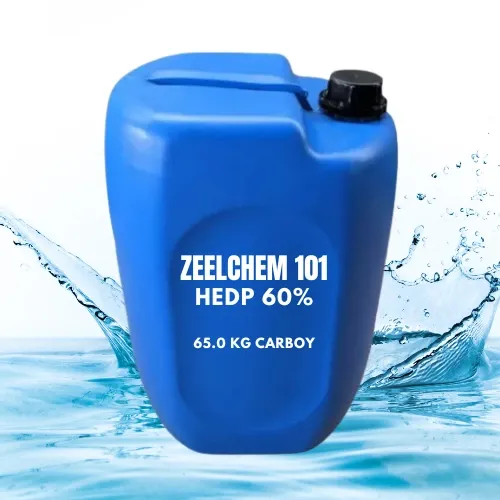
- 65 kg drums
- 250 kg HDPE drums
- IBC tanks
- Bulk tanker supply
Storage & Handling
The HEDP 60 should be stored in a dry, cool and well-ventilated location and out of direct light. Avoid contact with eyes and skin. Wear appropriate personal protective equipment when handling. HEDP has acidic properties and must be handled in accordance with SDS of the product.
Handling Precautions
- Wear gloves, goggles, and protective clothing
- Avoid direct contact with skin and eyes
- Use in a ventilated area
- Do not mix with incompatible chemicals without technical approval
- Refer to SDS before use
Environmental Considerations
HEDP 60 is generally considered safe when used at recommended doses. It does not bioaccumulate significantly. However, because it is a phosphonate, it contributes to phosphorus levels in wastewater. Most modern treatment plants are designed to manage these levels. Always check local discharge limits for total phosphorus to ensure compliance.
Key Chemical Properties
- Formula: C2H8O7P2
- Stability: Highly stable under high temperatures, extreme pH levels, and in the presence of chlorine.
- Function: Binds with metal ions (such as calcium, magnesium, and iron) to prevent them from depositing as hard mineral scale
Mechanism of action: It can form stable chelate with metal ions, and prevent metal ions from forming insoluble salt precipitation through chelation, so as to play the role of scale inhibition; at the same time, HEDP can form a layer of protective film on the metal surface to inhibit the corrosion of the metal to achieve corrosion inhibition effect.
Application: HEDP is widely used in industrial field, it is an excellent water treatment agent, commonly used in boiler water treatment, circulating cooling water systam, etc. It can effectively prevent scale generation and metal corrosion. In addition, it also has important applications in papermaking, printing and dyeing, electroplating and other industries, for example, in the paper industry for the removal of metal ions in the water to improve the quality of paper.
Product Strengths
- Consistent quality
- Reliable purity
- Available in liquid and powder grades
- Suitable for bulk industrial use
- Technical support available
- Custom packaging options
Core Industrial & Commercial Uses
- Water Treatment: Used to prevent scale and corrosion in circulating cooling water systems, oil fields, and low-pressure boilers.
- Detergents & Cleaners: Acts as a chelating agent and dispersant, breaking down mineral buildup and stabilizing water hardness.
- Textiles & Dyes: Functions as a peroxide stabilizer and a dye-fixing agent in the bleaching and dyeing industries.
- Electroplating & Concrete: Acts as a non-cyanide chelating agent and slows cement hydration in construction.
Future Trends and Innovations
Synergistic Formulations
Researchers are looking for new ways to mix HEDP with other inhibitors. The goal is to get better results using smaller amounts of chemical. These new blends aim to be effective at lower concentrations, which reduces the chemical footprint and helps lower overall costs.
Sustainable Alternatives and Green Chemistry
There is a push toward "green" water treatment. This involves developing scale inhibitors that are biodegradable and have a lower environmental impact. While HEDP 60 remains a gold standard, new compounds are being tested to see if they can match its power while breaking down faster in the environment.
Advanced Monitoring and Control Systems
Digital sensors now allow for real-time monitoring of phosphonate levels. Instead of dosing based on guesswork, operators can use automated pumps connected to these sensors. The system adds exactly the amount of HEDP 60 needed, based on current water chemistry. This stops waste and keeps protection levels steady.
Conclusion
HEDP 60 is a reliable, versatile tool for water treatment and industrial processes. By preventing scale and controlling corrosion, it protects vital equipment, saves energy, and improves product quality across many sectors. Whether you are managing a cooling tower, a boiler, or a textile mill, this chemical offers a proven way to keep operations running smoothly. As technology advances, HEDP 60 continues to play a central role in efficient, cost-effective, and safe water management strategies. Proper use, combined with smart monitoring, ensures that your systems stay clean and productive for the long term.
Official Recognition Certificate:


You may also like !
Check out what's new in our company !
Frequently asked questions
Here are some common questions about HEDP 60.
HEDP 60 is commonly used in water treatment, oil and gas, metal finishing, and the manufacturing of detergents and cleaning agents.
Yes, HEDP 60 is considered safe for use in consumer products when handled according to safety guidelines and regulations.
HEDP 60 is often preferred for its effectiveness in both corrosion inhibition and scale prevention, offering a more balanced performance compared to some other inhibitors.
While HEDP 60 is generally considered to have low toxicity, it is important to adhere to environmental regulations and guidelines to mitigate any potential risks to aquatic life.

Contact Us
We'd love to hear from you! Whether you have questions, feedback, or need support, our team is here to help. Simply fill out the form below, and we aim to respond to all inquiries within 24 hours. Thank you for getting in touch!
+91-9724593964
Vadodara - Gujarat - India